





In the effort to restore degraded landscapes and strengthen climate resilience, one factor consistently determines long-term success: community ownership. In Rwanda’s western region, the Rwanda Rural Rehabilitation Initiative is demonstrating how this principle can move from theory to practice through its Empowering Rutsiro and Rubavu Communities through Lake Kivu catchment Forest Restoration project, locally known as Igiti ni Ukubaho, meaning “A tree is life.”
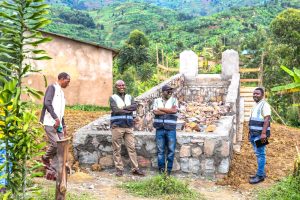
Focused on restoring the Lake Kivu catchment area, the initiative goes beyond tree planting to build a system in which local communities actively shape and sustain environmental outcomes. Across the Rubavu and Rutsiro Districts, implementation is not driven from the top down. Instead, it is anchored in local leadership structures, including village leaders, farmer groups, and trained community facilitators.
This approach has proven critical in ensuring both participation and accountability. By involving communities at every stage, from nursery preparation to planting and maintenance, the project has fostered a strong sense of ownership. As a result, tree planting is no longer seen as an external intervention, but as a shared responsibility tied to long-term community wellbeing.
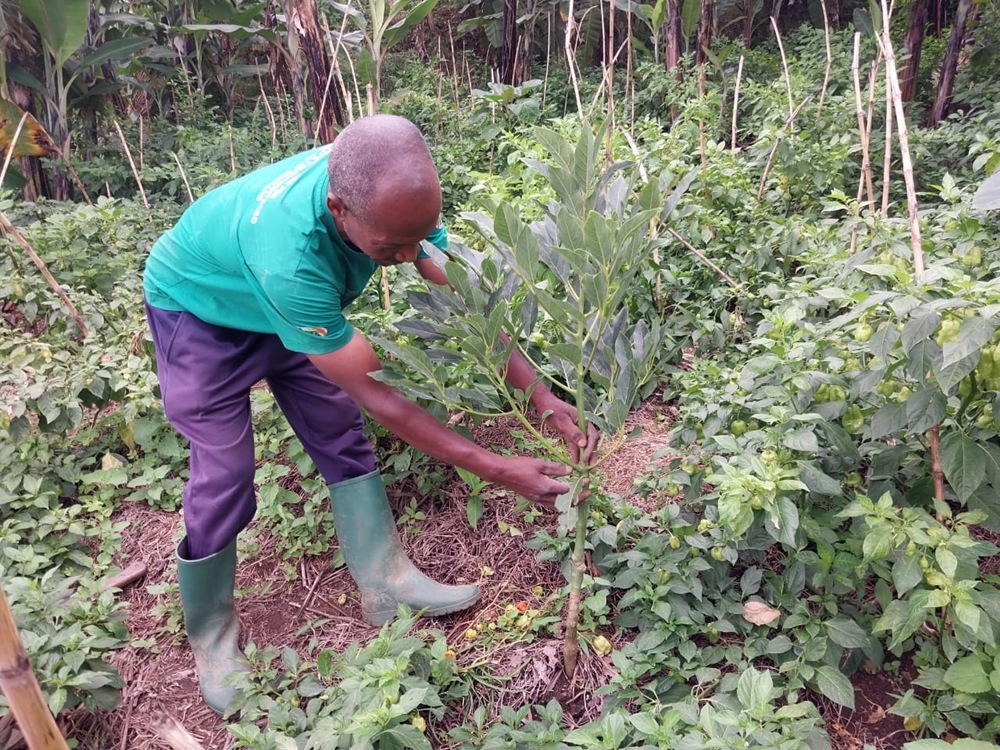
For participants like Habinshuti Etienne, a 52-year-old farmer involved in the project, this transformation is both practical and personal. “The project began by training us in tree nursery practices,” he explains. “They provided seedlings and financial support to prepare nurseries with different plant species, mainly fruit trees and ornamental plants.” Over time, his role has evolved beyond participation to leadership within his community, strengthening both his knowledge and his confidence. “I have gained so much from this project. I now understand how to grow avocado trees for high yield, how to mix plant varieties in the soil, and how to use fertilizers effectively,” he adds.
Beyond technical knowledge, the project is creating real economic pathways. For many participants, what began as environmental engagement is becoming a foundation for financial independence. “The income I earn has changed my life,” Habinshuti says. “I can now start my own business if the opportunity arises.”
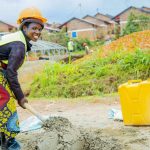
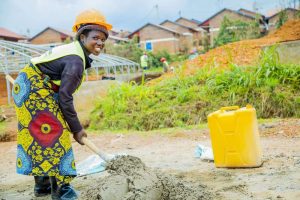
This experience is echoed by others in the community, including Nyiramihigo Frolida, a participant working at the Nyamwenda site. For her, the project has been a turning point in improving household stability and long-term prospects. “My life has changed because of this project. I have made visible progress, especially in livestock farming,” she explains. Through her participation, she has already acquired livestock, a tangible sign of economic progress. “I now own small livestock, including two sheep, and I plan to expand further,” she adds.
Importantly, the impact extends beyond individual households. Together with fellow participants, community members are contributing to broader environmental and nutritional outcomes. “When we prepare seedlings, some are meant to prevent soil erosion, while others produce fruits like avocados and pears for better nutrition,” Frolida notes. “We even plan to supply local markets in the near future.”
These outcomes reflect a deliberate strategy by RWARRI to connect environmental restoration with everyday livelihoods. By promoting multipurpose species, including fruit trees and bamboo, the project is simultaneously addressing food security, income generation, and ecosystem protection.
Equally critical is the role of local leadership in ensuring continuity. Community leaders and facilitators play a central role in mobilizing participation, monitoring progress, and maintaining planted trees, contributing to higher survival rates and long-term impact.
“At Rwanda Rural Rehabilitation Initiative (RWARRI), we believe that lasting environmental change begins with people,” says Uwizeye Belange, Executive Director of RWARRI. “The Igiti Ni Ukubaho project is not just about planting trees; it is about equipping communities with the knowledge, skills, and ownership needed to sustain those trees and the opportunities they create. When communities lead, restoration becomes not only possible, but sustainable”, he mentioned.
From a broader perspective, the #IgitiNiUkubaho project highlights an important shift in development practice. Rather than focusing solely on outputs, such as the number of trees planted, the initiative emphasizes sustainability, ensuring that communities have the knowledge, resources, and ownership needed to sustain efforts beyond project cycles.
At the same time, participants highlight areas for improvement, particularly the importance of timely financial support to maintain consistency and meet daily needs. This feedback reflects a maturing system, one where communities are not only beneficiaries, but active stakeholders shaping the project’s evolution.
As climate challenges continue to affect vulnerable landscapes, the need for scalable and sustainable solutions becomes increasingly urgent. The experience of RWARRI demonstrates that success lies not only in technical interventions but also in building systems in which people are central to the solution.
In this context, the #IgitiNiUkubaho project offers more than local impact. It presents a model, one where planting trees also means planting opportunity, strengthening resilience, and restoring hope across communities.