










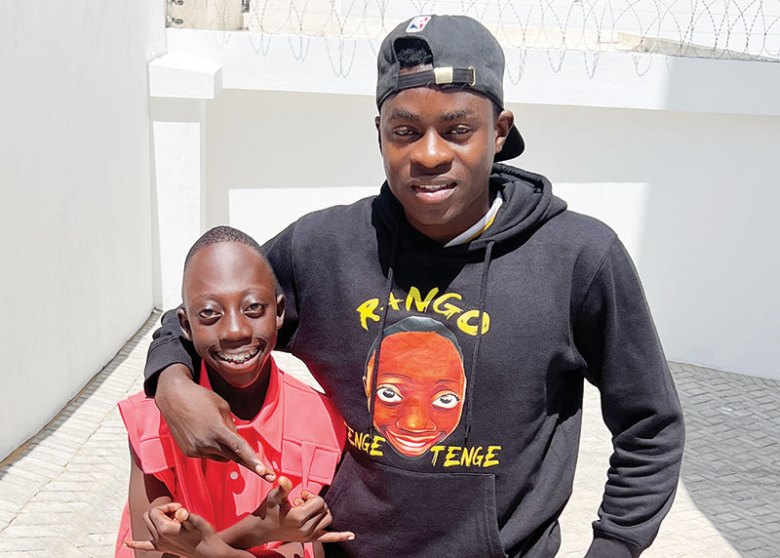
Saad Ssozi, widely known as Teng Teng on social media, has accused his former manager, Michael Kabonge, of taking control of his social media accounts, denying him access, and withholding revenue generated from his online activities.
Teng Teng made the allegations during a press briefing held alongside his father, a development that has sparked intense debate within Uganda’s online entertainment industry. The case has also raised broader concerns about child influencers, digital asset management, and the rights of children who generate income through online platforms.
According to the Teng Teng family, the dispute involves several highly followed international social media accounts. These include a TikTok account with more than 12.3 million followers, a YouTube channel with over 4.2 million subscribers and more than 1.6 billion views, and an Instagram account followed by over two million users.
Despite this level of global popularity, the family claims that the reported monthly income from these platforms was no more than US$100.
Speaking to the media, Teng Teng’s father said their main concern was transparency and full control over the accounts.
He said:
“We simply wanted things to be handled in a professional and respectful manner. We had even prepared a contract for Michael to sign, but later things changed and he began claiming that the accounts were his personal accounts.”
Teng Teng’s father also alleged that the former manager attempted to change login credentials and block the family’s access to the accounts.
He said:
“We have screenshots showing how he tried to change the login information on the accounts. What is most disturbing to us is that these accounts are based on my child’s name, his appearance and his activities. We are concerned that they could also be sold.”
So far, no independent authority has verified the exact revenue generated by the accounts. However, digital economy experts note that accounts with millions of followers and billions of views can generate significant income through YouTube advertising, sponsorship deals, brand partnerships, merchandise sales, livestream gifts, and platform monetization programs.
Teng Teng himself said the accounts were initially created using his manager’s email because he did not yet have a phone or independent internet access at the time.
He said:
“Those accounts are in my name, but they were created using his email because I did not have a phone at the time. Now I am no longer able to access some of them.”
Teng Teng’s rise to fame began with short dance and comedy clips that went viral on TikTok and other platforms, making him one of Uganda’s most recognized child creators internationally.
His popularity soon extended beyond Africa. Merchandise featuring his image began circulating online, Snapchat created a custom filter using his likeness, and earlier this year he collaborated in a livestream with American streamer IShowSpeed during a widely discussed Africa tour, further boosting his global visibility.
Despite this rapid rise to fame, the family says the financial returns were not clearly reflected.
His father said:
“Sometimes the money we earned was not even enough to pay school fees and other daily necessities. People see millions of followers and assume the child is wealthy, but up to now my child has not even been able to buy a bicycle.”
The family says lawyers are now involved in the matter, seeking clarification and mediation over ownership of the accounts and related digital assets linked to Teng Teng’s name.
Michael Kabonge has not yet publicly responded to the allegations. However, according to the family, he maintains that he owns the accounts, stating that he created and managed them during the early stages of Teng Teng’s rise to fame.
The dispute has triggered wider debate on social media over who should own and control the accounts of child influencers, particularly when they are originally created by managers, parents, or other adults.
Digital media and internet rights analyst David Kigozi said the case highlights a fast-growing industry in Africa that still lacks adequate regulation.
He said:
“When a child becomes the face of something that has millions of viewers, there is a need for legal protection, financial transparency, and oversight by independent bodies. In many African countries, the online content economy is growing faster than the laws that protect children.”
Child rights advocates have also raised concerns about the emotional and financial risks children may face when their online careers are managed by adults without clear contracts or independent oversight.
Entertainment lawyer Sarah Namuli said such disputes often arise due to unclear legal frameworks governing digital assets.
She said:
“While the child’s face, name, and talent are what give the account its value, the issue of rights is far more complex than simply determining who opened the email. Courts are increasingly examining the role of each party, parental rights, contracts, and business interests.”
The controversy continues to fuel debate online, with many questioning whether Uganda’s emerging creator economy has sufficient safeguards for child influencers earning income through digital platforms.
Some argue that clearer contracts, regulated financial management for minors, parental oversight, and stronger child protection laws are urgently needed. Others caution against rushing to conclusions before all contracts and financial records are independently reviewed.
The Teng Teng family maintains that its priority is regaining access to the accounts and ensuring proper oversight of the child’s future online presence.
Beyond the individual dispute, the case has highlighted a broader and growing issue in Africa’s digital economy: who owns a child’s digital identity, image, and online revenue when fame is built through social media platforms?
Although online entertainment continues to reshape celebrity culture in Africa, the Teng Teng dispute may become a landmark case in ongoing discussions on digital rights, child protection, and the true cost of viral fame.