




Rome / Harare, 18 November 2026 — Senior officials from the African Risk Capacity (ARC) Group and the UN World Food Programme (WFP) have reaffirmed their collaboration on protecting food systems against climate shocks, as Zimbabwe and the wider region prepare for a potentially severe El Niño season.
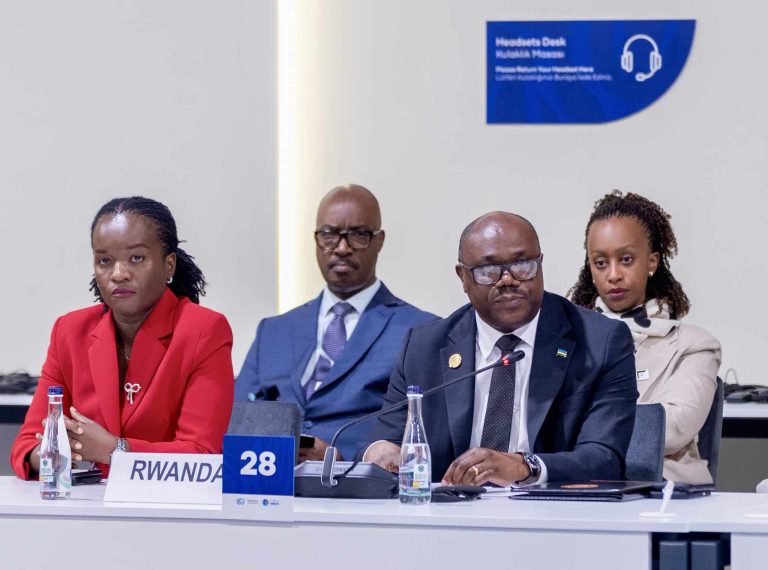
The side event, titled “Financing the future: Innovative partnerships and investment solutions for resilient food systems,” took place on 17 November at WFP headquarters in Rome on the margins of the organisation’s Executive Board session. It brought together representatives of the Government of Zimbabwe, ARC, WFP and the private sector to discuss how public resources, private capital, dedicated climate funds and risk-transfer instruments can support nationally led food systems.
Dr Jean Chrysostome Ngabitsinze, UN Assistant Secretary-General and Group Director General of ARC, participated as a panellist. He outlined ARC’s approach of linking early-warning systems and contingency plans with financing arranged in advance so governments can act before predictable shocks hit and deliver assistance to families more quickly.
Ngabitsinze also congratulated Luke J. Lindberg on his appointment as WFP Executive Director. Lindberg, who previously served as Under Secretary for Trade and Foreign Agricultural Affairs at the U.S. Department of Agriculture, assumed office on October 26, 2026, succeeding Cindy McCain.
Through the ARC Replica mechanism, humanitarian actors can purchase parametric insurance policies alongside governments. In 2024, an El Niño-driven drought triggered more than USD 32 million in combined payouts in Zimbabwe, with portions going to the government, WFP and the Start Network to support food assistance and recovery for hundreds of thousands of people.
Zimbabwe’s context makes such tools particularly relevant. Although the 2026 harvest was above average nationally, analysts project rising food insecurity in some deficit-producing areas later this year and into 2027 as household stocks deplete, market dependence increases and a strong El Niño is expected to reduce rainfall and incomes during the 2026/27 season.
The government is expanding strategic grain reserves, preparing cloud-seeding operations and strengthening disaster-risk financing arrangements. WFP has also advanced anticipatory action, climate services and partnerships with national institutions.
ARC, a specialised agency of the African Union established in 2012, provides sovereign parametric insurance and related risk-management tools. Since its founding it has disbursed more than USD 170 million in payouts, supporting early responses that protect tens of millions of people.
The Rome panel also featured WFP Zimbabwe Country Director Barbara Clemens, Zimbabwe Investment and Development Agency CEO Tafadzwa Chinamo, CBZ Holdings Group CEO Lawrence Nyazema and others, with moderation by Peter Ndoro.
As climate risks intensify across southern Africa and traditional humanitarian funding faces pressure, the exchange underscores a shared priority: moving from reactive emergency response towards earlier, more predictable protection of livelihoods and food systems.