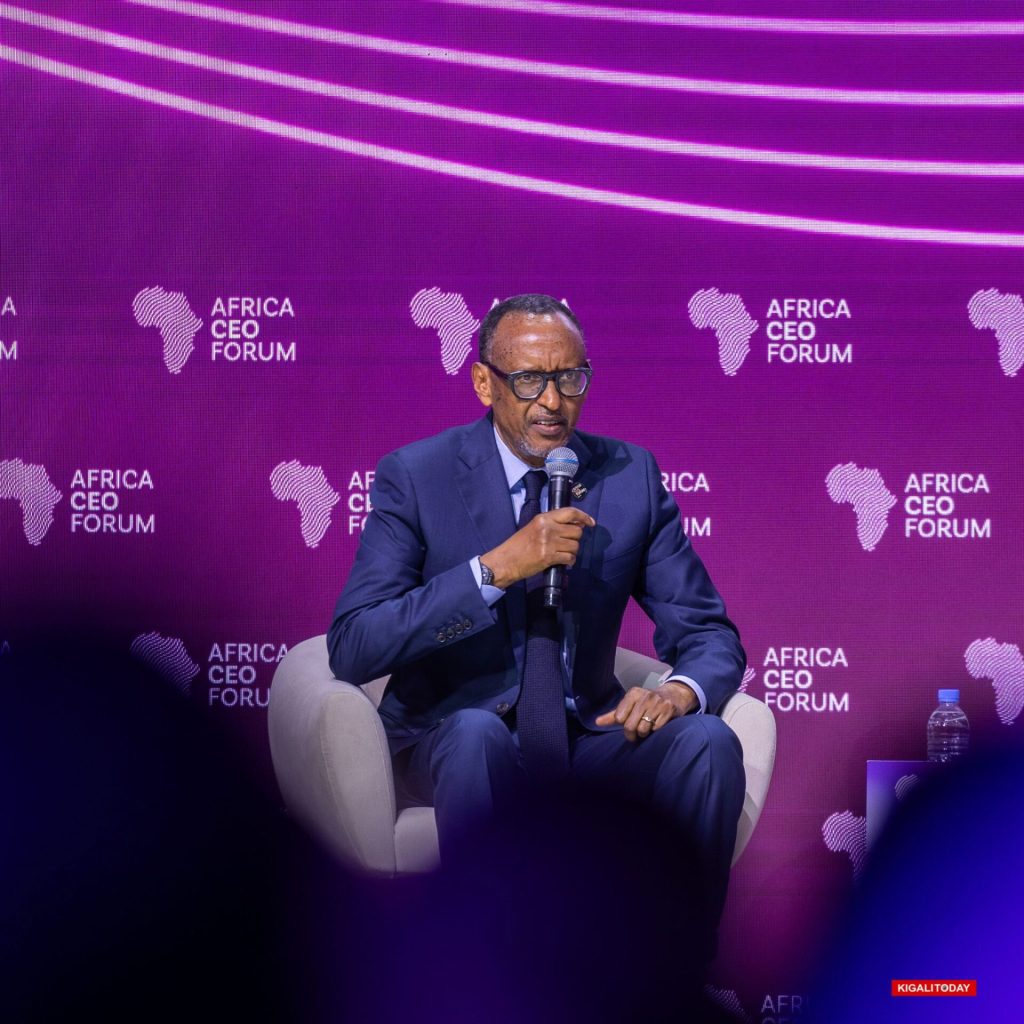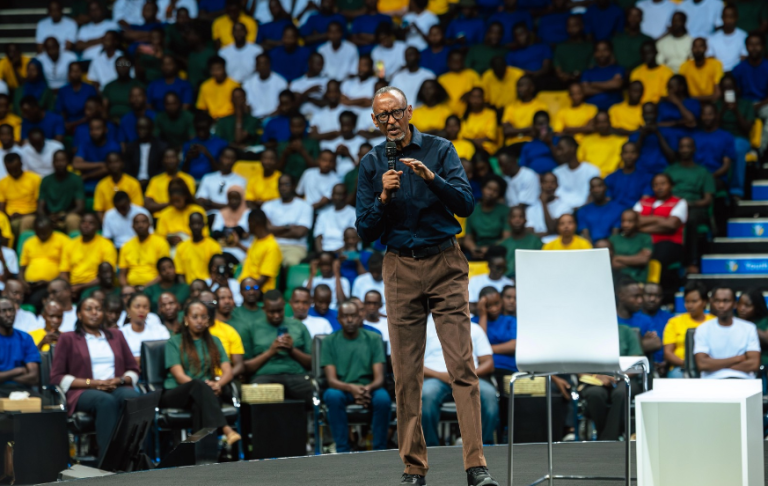





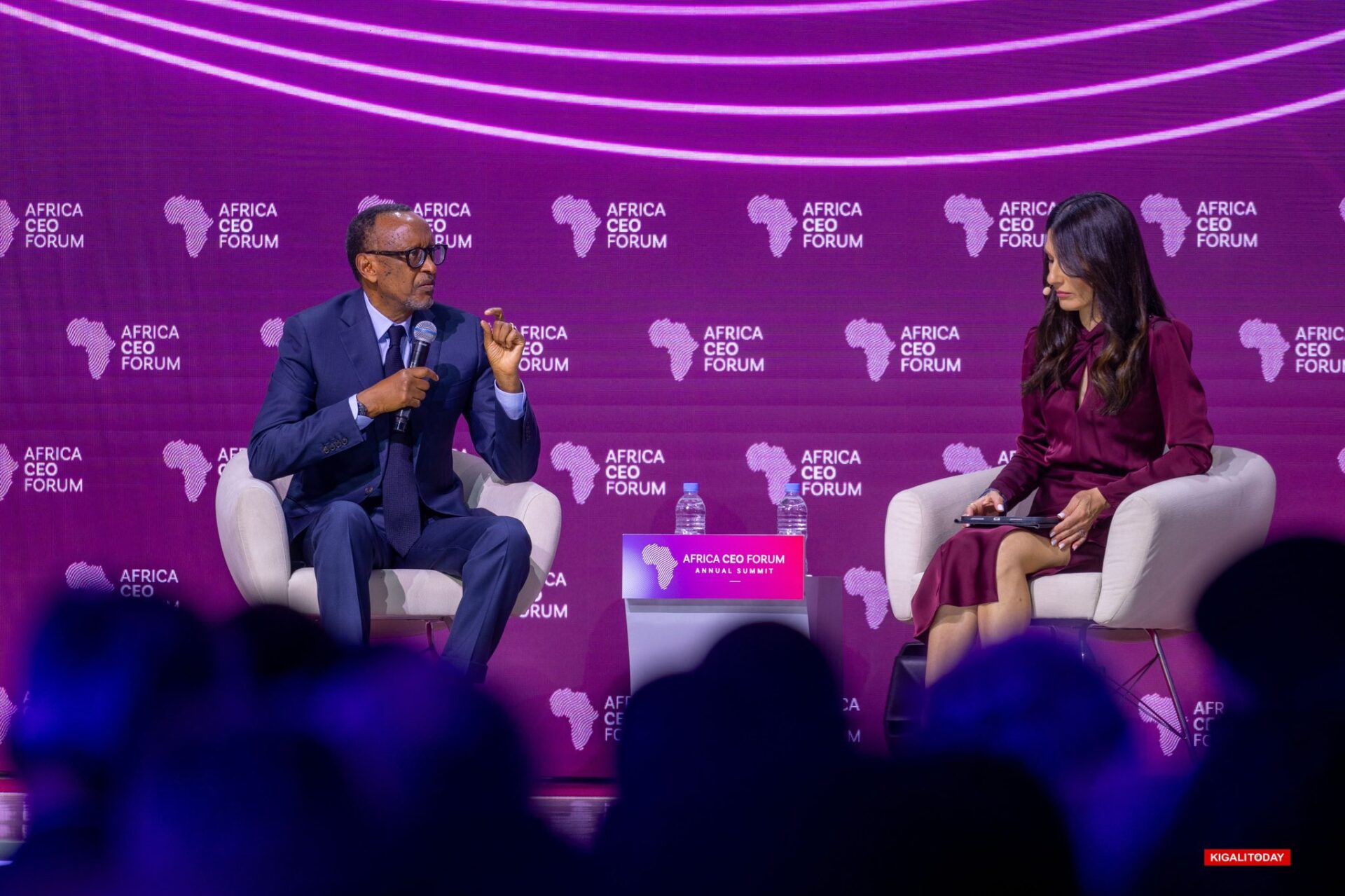
Kigali -As Rwanda hosted the Africa CEO Forum 2026, the President of the Republic of Rwanda, Paul Kagame, raised serious concerns about the way international sanctions are imposed, stating that they are often not based on full justice but rather on the interests of powerful countries in international relations.
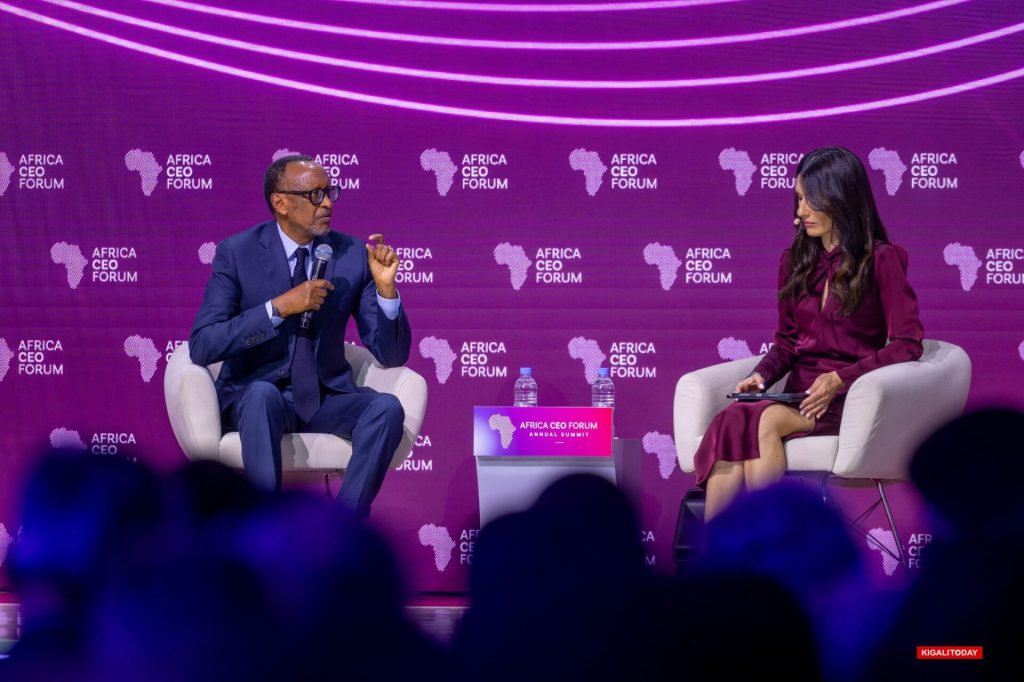
He made these remarks during an interview with CNN journalist Eleni Giokos, held on the occasion of the opening of the Africa CEO Forum, taking place in Kigali from 14 to 15 May 2026.
President Kagame said that the structure of decision-making around international sanctions often reflects bias, where countries with significant influence on the global stage determine how situations are interpreted, rather than decisions being based on a thorough analysis of the faults of those being sanctioned.
He said: “They are imposed based on the one who gives less against the one who gives more. If someone knows they will gain more in a certain place, it becomes easier for that place, even if those people are the ones at fault.”
In his analysis, President Kagame noted that this sometimes leads to sanctions that do not reflect the reality of what is happening globally, but are instead used as tools of economic and power relations.
These remarks come at a time when there is ongoing global debate on how sanctions should be applied, particularly between powerful countries and developing nations.
President Kagame emphasized that the way these systems are structured often results in some countries receiving a different form of justice than others, turning sanctions into instruments of political and economic power rather than genuine justice.
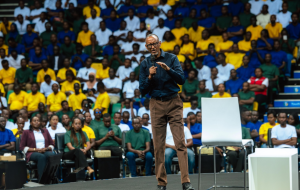
These issues were highlighted during the Africa CEO Forum taking place in Kigali, regarded as one of the most important meetings on the African continent, bringing together leaders from the private sector and political decision-makers.
The forum, attended by over 2,000 participants from more than 75 countries, focused on the theme: “Scale or Fail: Why Africa Must Embrace Shared Ownership,” highlighting concerns that Africa must urgently integrate and strengthen its capacity to compete globally.
Participants discussed investment, industry, regional cooperation, and how Africa can build an economy based on its own capacities, at a time when the world is undergoing changes in trade and international relations.
In his address, President Kagame reflected on long historical patterns showing how Africa has gone through different periods of domination and the consequences of international relations, from the slave trade, colonialism, wars, to epidemics and other global challenges.
He noted that despite these changing eras, the core problem remains the same: Africa continues to occupy a low position in decision-making over its own resources.
He said: “Why is Africa always in a position of being left behind?”
He pointed out that the continent is richly endowed with natural resources, including about 60% of the world’s solar energy potential, as well as minerals essential for modern technology, yet these resources continue to be affected by the lack of strong cooperation and coordination.
President Kagame called on African leaders, the private sector, and investors to think broadly, stop viewing themselves as victims of global systems, and instead strive to have a unified voice and the capacity to make collective decisions.
He said: “We need to come together and do something about our problems.”
He added that Africa should move from rhetoric to concrete action, as much of what is known is not being implemented effectively.
In another strong message, President Kagame also criticized how major powers continue to preach human rights and good governance while, in practice, contributing to the continued extraction of Africa’s resources.
He said: “There are those who come here preaching democracy and human rights, but with the other hand continue to take what belongs to others.”
In concluding his remarks at the opening of the forum, President Kagame stressed that Africa has many untapped opportunities, but the time has come for it to take responsibility.
He noted that the world is undergoing major changes that could either present opportunities or challenges, depending on how Africa responds.
His message was clear: Africa must choose between continuing to operate in fragmented efforts or uniting to secure its place in the global economy.