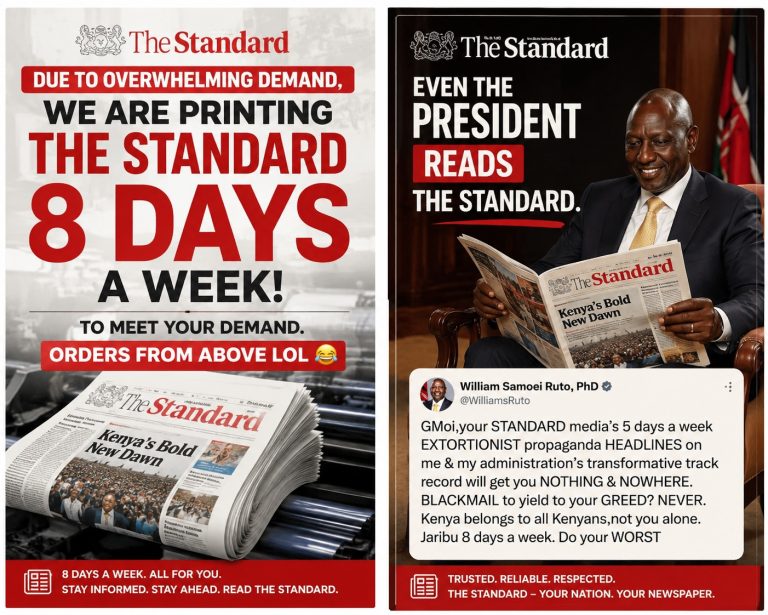







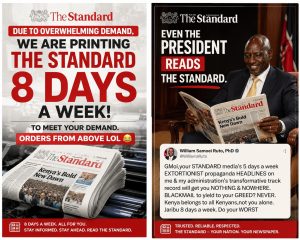
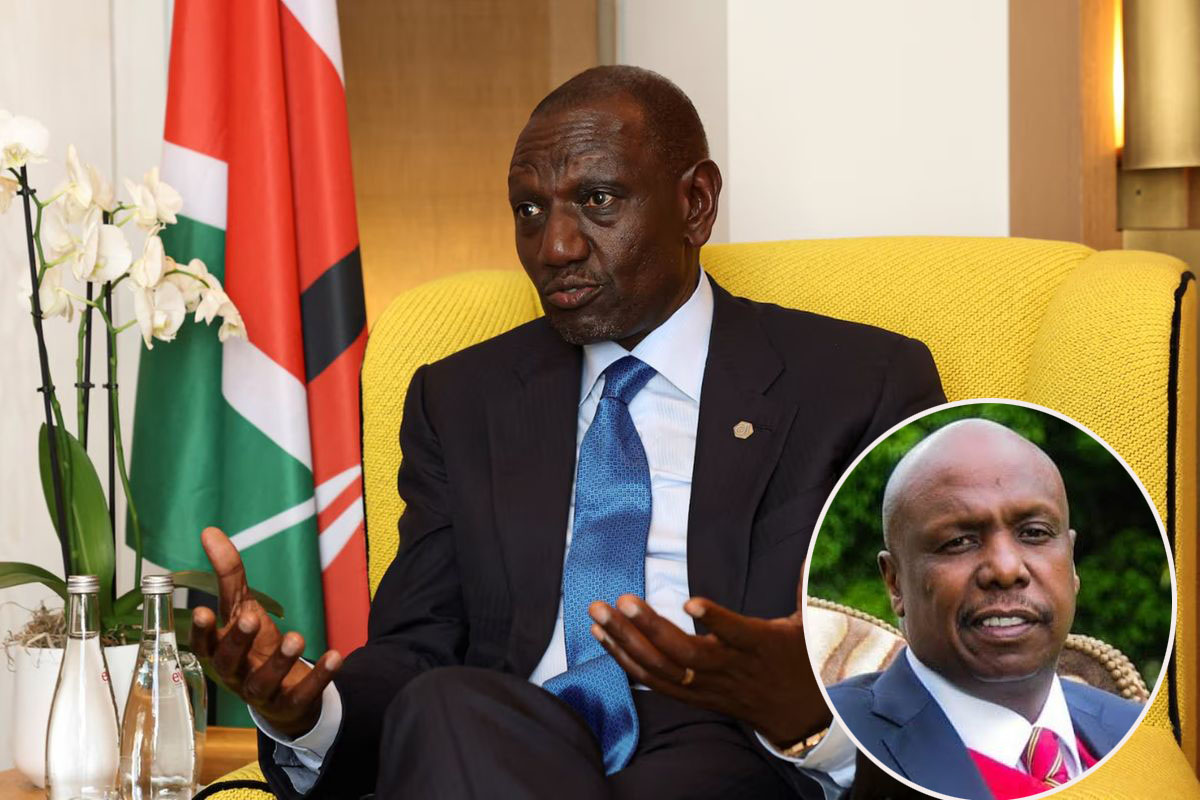
NAIROBI – June 25, 2026 -Kenyan President William Ruto has accused one of Kenya’s leading media houses, Standard Media Group, of running what he called a “pressure and fraud” campaign to demand undue benefits, sparking a long-running debate over media freedom in Kenya.
In a message posted on X on Wednesday, June 24, 2026, Ruto addressed allegations that the media group continues to publish biased stories about his leadership, engaging in what he called “blackmail” aimed at pressuring him to change the way the government operates.
He also directly targeted former Baringo Senator Gideon Moi, whose family is said to be among the stakeholders in Standard Media Group, accusing him of continuing to exert pressure on his leadership through the media.
President Ruto’s remarks are among the strongest he has made about the media since taking office in 2022, prompting a swift response from Standard Media Group.
In a statement signed by the company’s CEO, Chaacha Mwita, Standard Media Group denied the allegations, saying its professionalism is based on truth, public interest, and professional standards.
It said: “We provide the public with information as it is, even if it is not to the taste of those in authority. The role of the media is to hold those in power accountable in a democratic country.”
The company also expressed concern that the Head of State would publicly criticize the media instead of using the normal channels for addressing concerns and overseeing its operations, saying such actions could affect the safety of journalists.
In addition, Standard Media Group said that the Kenyan government owes it 1.2 billion Kenyan shillings (about 9.3 million U.S. dollars) in unpaid debts, arguing that it should not be accused of exerting pressure while the debt remains unpaid.
The incident has exposed a long-standing feud between Ruto and Gideon Moi, which analysts say is an example of the evolving relationship between politics and the media in Kenya.
Media rights groups, including the Media Council of Kenya, have expressed concerns that such statements by senior officials could undermine press freedom, especially as Kenya prepares for the 2027 elections.
Although it is not yet clear whether legal action will be taken, the dispute has drawn renewed attention to relations between the government and the media in Kenya. The country is widely regarded as having one of the most vibrant media sectors in Africa, despite recurring concerns about political pressure and economic constraints.